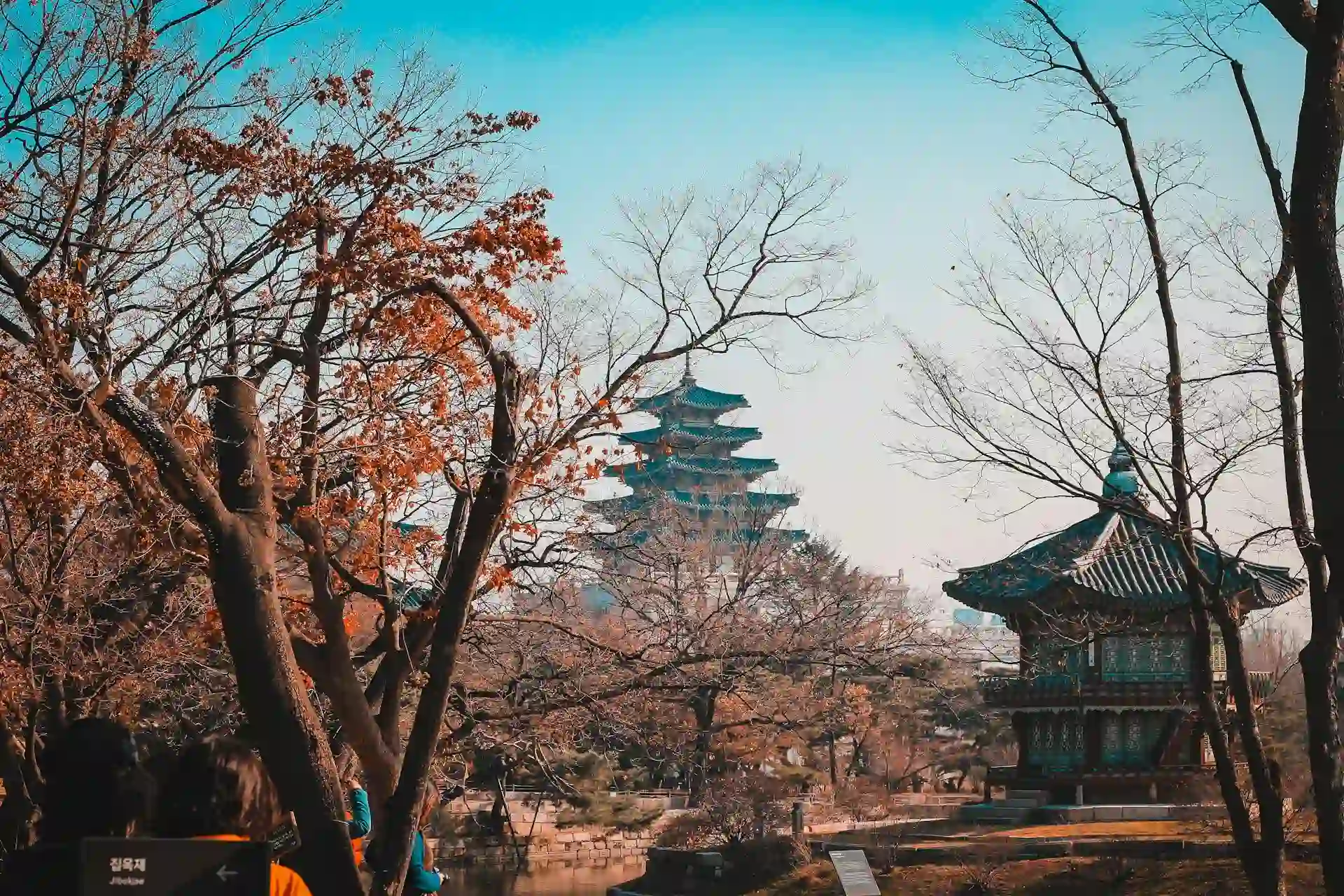
Every year, more Nepali students choose South Korea over the more traditionally discussed destinations — the UK, Australia, the US — and it's worth understanding exactly why, beyond the K-pop posters and K-drama marathons that first spark interest for a lot of students. Korea offers something genuinely distinctive: legally fixed, affordable tuition at globally ranked universities, a fully funded scholarship pathway that doesn't require a formal English test, real part-time work rights, and a booming, technology-driven economy actively looking to retain skilled foreign graduates.
This guide walks through the actual, substantiated reasons Korea has become such a compelling study destination for Nepali students — not vague marketing claims, but the specific cost comparisons, scholarship mechanics, safety data, and career pathways that genuinely set it apart, alongside an honest look at who Korea fits best.
Reason 1: World-Class Education at a Fraction of Western Costs
Korea's university system includes genuinely globally recognized institutions — Seoul National University, KAIST, Yonsei University, and Korea University all rank among the world's top universities — but the cost of attending them is considerably lower than equivalent prestige-tier institutions in the US, UK, or Australia.
| Cost Factor | Korea | Typical Western Comparison |
|---|---|---|
| National university tuition | Fixed by Korean law, commonly around KRW 2.4–3 million per semester | Often several times higher at equivalent public universities elsewhere |
| Overall tuition level | Commonly cited as 30–40% lower than the US, UK, or Australia for comparable institutions | Baseline for comparison |
| KAIST specifically | Tuition effectively waived for admitted international students, bundled directly with admission | Rare for any equivalent-tier institution globally |
This isn't a trade-off between quality and cost — it's a genuine combination of both, which is precisely why Korea has become such an efficient choice for academically strong Nepali students who want a globally respected degree without the financial burden many Western alternatives carry.
Reason 2: Genuinely Accessible, Fully Funded Scholarships
The Global Korea Scholarship (GKS) stands out as one of the most comprehensive government-funded scholarship programs available anywhere — covering full tuition, a real monthly stipend, round-trip airfare, and a fully funded year of Korean-language training before your degree program even begins.
- No IELTS or TOEFL is required — a Medium of Instruction certificate is generally accepted instead, a genuine advantage for Nepali applicants who may not have had access to formal English-test preparation.
- The GPA requirement is genuinely accessible — commonly cited at 2.64 on a 4.0 scale, or around 80% of a previous degree.
- Nepal receives a specific annual quota, giving a real, structured opportunity rather than an impossibly broad global competition.
This combination — no mandatory English test, an accessible GPA bar, and a fully funded language-training year built directly into the scholarship — makes GKS a genuinely different kind of opportunity compared to many competing international scholarships that demand formal English certification most students in Nepal haven't had the resources to prepare for.
Reason 3: A Genuinely Safe, Orderly Country
Korea is widely regarded as one of the safer countries globally for international students, with a well-organized emergency response system and generally low violent crime rates. For families sending a child abroad for the first time, this matters as much as academic reputation — knowing that daily life, late-night commutes, and general public safety are genuinely well-managed removes a real source of anxiety that factors heavily into where families are willing to send their children.
Reason 4: Real, Legally Protected Part-Time Work Rights
Unlike some study destinations where part-time work exists in a gray area, Korea's system is explicit and structured: international students can legally work part-time with a proper permit, with weekly hour limits tied directly to Korean-language proficiency (commonly 20–25 hours during term time for students with TOPIK Level 3 or above, with extended hours during official vacations).
This isn't just a financial convenience — it's a genuine opportunity to build real workplace Korean, professional experience, and independence, all of which directly support a student's eventual transition into Korea's job market after graduation.
Reason 5: A Booming Economy With Active Demand for Foreign Talent
Korea is home to globally dominant companies — Samsung, LG, Hyundai, SK, and a rapidly growing technology and semiconductor sector — and its labor market genuinely benefits foreign graduates with the right skills and language ability.
| Career Pathway | What It Offers |
|---|---|
| D-10 (Job-seeking visa) | Up to a genuine window after graduation to search for employment without leaving Korea |
| E-7 visa | Korea's skilled/professional work visa, increasingly accessible to Nepali graduates and workers, including a newly formalized direct recruitment channel opened in late 2024 |
| Major Korean conglomerates | Companies like Samsung maintain genuine institutional pipelines with specific universities (Sungkyunkwan University, for instance) |
| Technology sector growth | A consistently strong, ongoing demand for skilled graduates in engineering, IT, and applied sciences |
Korea's demographic reality — a shrinking domestic working-age population — means the country has genuine, structural, long-term incentive to retain skilled foreign graduates, not just tolerate them temporarily. That's a meaningfully different dynamic than a country where foreign workers are treated as a purely transitional labor source.
Reason 6: A Culture Many Nepali Students Already Feel Connected To
This is worth taking seriously rather than dismissing as superficial: Korea's global cultural influence — K-pop, K-dramas, Korean cinema, and Korean food culture — means a huge number of Nepali students arrive with genuine prior familiarity and enthusiasm for Korean culture, long before they ever set foot in the country. This isn't just a pleasant bonus; it meaningfully eases the cultural adjustment process compared to a destination a student knows nothing about beyond its university rankings, and it often sustains motivation through the genuinely demanding process of learning Korean and adapting to a new academic system.
Reason 7: Advanced Technology and Infrastructure
Korea consistently ranks among the world's most digitally connected, infrastructure-advanced countries — exceptionally fast, reliable internet, an efficient and extensive public transportation network (particularly in Seoul and other major cities), and a genuinely modern, well-maintained urban environment. For students pursuing technology, engineering, or applied science fields specifically, studying in a country that exemplifies this kind of technological infrastructure firsthand is a genuine, practical advantage beyond the classroom.
Reason 8: A Growing, Increasingly Established Nepali Community
Korea's Nepali student and worker population has grown substantially — reflecting years of EPS (Employment Permit System) migration alongside a steadily increasing number of Nepali students pursuing degrees. This matters practically: a new student arriving in Korea today benefits from a genuinely larger, more established support network of fellow Nepalis — for everything from finding halal or familiar food, to navigating early cultural adjustment, to simply having people who understand exactly what the transition feels like.
Reason 9: A Structured, Transparent Visa and Application Process
While no visa process is entirely without friction — and Korea's own appointment and verification systems have seen real changes and occasional congestion in recent cycles — the overall D-2 and D-4 visa framework is genuinely well-documented, with clear subcategories, published financial thresholds, and a predictable twice-yearly (March/September) intake structure. Compared to some destinations with more opaque or inconsistently enforced visa requirements, Korea's process, once understood, is one a well-prepared applicant can navigate with real confidence.
Reason 10: A Strong, Accessible Healthcare System
Once registered as a foreign resident, enrollment in Korea's National Health Insurance Service (NHIS) is generally required, significantly reducing out-of-pocket medical costs for the kind of routine and occasional healthcare needs that come up during a multi-year stay abroad. You can review current NHIS enrollment details directly through the official NHIS website — a genuinely reassuring system for students and families comparing destinations where international student healthcare coverage can be far less structured or affordable.
Reason 11: Genuine Geographic and Cultural Proximity Within Asia
For Nepali students and families, Korea offers a meaningfully shorter cultural and geographic distance than many Western alternatives — direct and connecting flight options exist, time zone differences are considerably more manageable for regular family communication than destinations across multiple time zones in the West, and broader Asian cultural context (food norms, family-oriented social structures, respect-based social hierarchies) tends to feel less alien to many Nepali students than a fully Western cultural environment might.
Korea Compared to Other Popular Study Destinations
| Factor | Korea | UK/Australia/US (General Comparison) |
|---|---|---|
| Tuition cost | Commonly 30–40% lower at comparable institutions | Baseline, generally higher |
| Fully funded scholarship accessibility | GKS — no mandatory English test, accessible GPA bar | Many equivalent scholarships require formal English certification |
| Part-time work rights | Structured, legally clear, hours tied to language proficiency | Varies by country, generally present but with different structures |
| Safety | Consistently rated among the safer study destinations globally | Varies significantly by specific city/region |
| Cultural familiarity for Nepali students | Often high, given Korean Wave's global reach | Varies, generally less pre-existing familiarity |
| Post-graduation work pathways | D-10 job-seeking visa, E-7 skilled worker visa, active government retention policy | Varies significantly by country's current immigration policy |
Who Korea Is Genuinely the Right Fit For
- Students who are genuinely willing to invest in Korean-language study, since daily life, academic success in Korean-medium programs, and the strongest career outcomes all depend heavily on real proficiency, not just English ability.
- Academically strong students pursuing GKS or university-specific scholarships, given how much Korea's funding landscape can offset total cost for well-prepared applicants.
- Students interested in technology, engineering, business, or Korean-language-adjacent career fields, where Korea's economy offers genuinely strong, structurally supported demand.
- Families prioritizing safety and a structured, well-documented support system for a child's first major move abroad.
Who Should Think Carefully Before Choosing Korea
- Students unwilling to commit to real Korean-language study may find both academic life and post-graduation career options considerably more limited than Korea's reputation suggests, since English alone doesn't carry the same weight in Korea's daily and professional life as it might elsewhere.
- Students specifically targeting a Western immigration pathway as their primary long-term goal may find other destinations' permanent residency frameworks more directly aligned with that specific objective, even though Korea's own points-based residency pathways have genuinely improved.
How to Actually Get Started
- Decide your pathway: direct D-2 degree admission if you already meet academic and language requirements, or D-4 language training first if you need to build Korean proficiency before a degree program.
- Research and shortlist universities, matching your academic background, budget, and target field realistically.
- Seriously evaluate GKS eligibility alongside your standard application, given how dramatically it can change your total cost picture.
- Begin building genuine Korean-language proficiency early, through structured instruction like Toddle's basic Korean language class or dedicated TOPIK I class — both for your application strength and for the academic and career outcomes that follow.
- Build your document and financial preparation timeline well ahead of Korea's March or September intake windows.
How Toddle Supports This Decision
Choosing to study in Korea is a genuinely significant decision, and the strongest outcomes consistently come from students who prepare thoroughly — academically, financially, and linguistically — well before their actual application begins.
Toddle, based in Hetauda, Makawanpur, supports Nepali students through every stage of this decision: D-2 student visa counselling services for degree-track applicants, structured Korean-language instruction through basic and advance coursework, and dedicated EPS-TOPIK preparation for students and workers pursuing Korea through the employment pathway as well. For a deeper look at what genuinely sets a well-credentialed language program apart in this space, Toddle's own account of why students choose Toddle specifically is worth reviewing, alongside its broader guide to Korean language classes available in Nepal.
Frequently Asked Questions about Why to Study in Korea
1. Why do Nepali students increasingly choose Korea over Western destinations?
A combination of significantly lower tuition costs, genuinely accessible fully funded scholarships like GKS, real part-time work rights, strong safety, and active demand for foreign talent in Korea's booming economy.
2. Is Korean university tuition really cheaper than Western alternatives?
Yes — commonly cited as 30–40% lower than comparable institutions in the US, UK, or Australia, with national university tuition fixed by Korean law.
3. Does GKS really not require IELTS or TOEFL?
Correct — a Medium of Instruction certificate is generally accepted instead, a genuine advantage for applicants without formal English-test preparation.
4. Is Korea genuinely safe for international students?
Yes — it's widely regarded as one of the safer study destinations globally, with low violent crime rates and a well-organized emergency response system.
5. Can international students really work part-time in Korea?
Yes, with a proper legal permit, and weekly hour limits tied directly to Korean-language proficiency level.
6. Does Korea actively want foreign graduates to stay and work after their studies?
Yes — Korea's demographic trends create genuine, structural demand for skilled foreign talent, reflected in pathways like the D-10 job-seeking visa and an increasingly accessible E-7 skilled worker visa.
7. Do I need to speak Korean to study and succeed there?
For the strongest academic and career outcomes, yes — genuine Korean-language proficiency significantly expands both your university options and your post-graduation career prospects.
8. What is the Global Korea Scholarship (GKS)?
Korea's flagship, fully funded government scholarship, covering tuition, a monthly stipend, airfare, and a year of language training, with a specific annual quota for Nepali applicants.
9. Is Korea's education quality genuinely globally competitive?
Yes — universities like Seoul National University, KAIST, and Yonsei consistently rank among the world's top institutions.
10. Are there established Nepali communities in Korea already?
Yes — a substantial, growing Nepali population exists in Korea, reflecting years of EPS migration alongside a steadily increasing number of Nepali students.
11. How does Korea's healthcare system work for international students?
Registered foreign residents generally enroll in Korea's National Health Insurance Service, significantly reducing out-of-pocket medical costs.
12. What makes KAIST specifically stand out financially?
Admitted international students commonly receive an automatic full tuition waiver bundled directly with admission, rather than requiring a separate scholarship application.
13. Is Korea a good choice for students interested in technology careers specifically?
Yes — Korea's technology, engineering, and semiconductor sectors offer genuinely strong, structurally supported demand for skilled graduates.
14. Does Korea's visa process compare favorably to other study destinations?
Generally yes — the D-2/D-4 visa framework is well-documented with clear subcategories and published requirements, though applicants should stay current with evolving appointment and verification system changes.
15. What's the typical pathway if I don't yet have the required Korean proficiency for direct degree admission?
The D-4 language training visa route — studying Korean at a university-affiliated institute before transitioning to D-2 once you meet your target program's requirements.
16. Does Korea's cultural popularity actually help students adjust once they arrive?
Genuinely yes — many Nepali students arrive with real prior familiarity and enthusiasm for Korean culture, which meaningfully eases the adjustment process compared to an entirely unfamiliar destination.
17. How does Korea compare to other Asian study destinations for Nepali students?
Korea offers a particularly strong combination of fixed, affordable tuition, substantial scholarship funding, and active government interest in retaining foreign graduates — a combination not every regional alternative matches as comprehensively.
18. What career fields benefit most from studying in Korea specifically?
Technology, engineering, business with ties to major Korean conglomerates, and any field where genuine Korean-language proficiency becomes a professional asset.
19. Is Korea a good fit for every student?
Not necessarily — students unwilling to commit to genuine Korean-language study, or those specifically prioritizing a Western immigration pathway as their core goal, may want to weigh other destinations more heavily.
20. What's the best first step for a Nepali student seriously considering Korea?
Deciding between the D-2 (direct degree) and D-4 (language-training-first) pathway based on current proficiency, then beginning structured Korean-language preparation and researching GKS eligibility well ahead of Korea's March or September intake.
Conclusion: A Genuinely Strong Choice, for the Right Reasons
Korea's appeal to Nepali students isn't built on hype — it's built on a genuinely compelling combination of factors that hold up to real scrutiny: legally fixed, considerably lower tuition than Western alternatives; one of the world's most generous and accessible fully funded scholarships; real, legally protected part-time work rights; a safe, orderly country; and a booming, technology-driven economy with genuine structural demand for skilled foreign talent.
The students who get the most out of this choice are the ones who approach it with open eyes — genuinely committing to Korean-language study, researching their specific university and scholarship options thoroughly, and building their application and financial preparation well ahead of Korea's intake deadlines. Do that, and studying in Korea stops being just an appealing idea shaped by K-dramas and social media — it becomes a genuinely well-reasoned, strategically sound decision for your education and your future career.
And a practical, honest look at the cultural and legal adjustment every new student in Korea goes through, Toddle's guide on what not to do in Korea is a useful companion read before departure. Students exploring their full Korea study pathway, or wanting to compare their options across Toddle's test preparation offerings, can reach out directly through Toddle's contact page — and for official, government-maintained information on university options and scholarships, the Study in Korea portal is a valuable primary resource to explore alongside your own research.